Why the Right Make Up Brush Makes Such a Big Difference
Most people who struggle with their makeup application are not using the wrong products — they're using the wrong tools. A foundation that looks cakey, eyeshadow that won't blend, or blush that sits in one obvious stripe on the cheek are almost always brush problems, not product problems. The right makeup brush picks up the correct amount of product, deposits it evenly, and allows you to blend in a way that fingers or sponges simply cannot replicate for most applications. Once you understand what each type of brush is designed to do, everything from a five-minute daily look to a full glam application becomes noticeably easier and more consistent.
The market for make up brushes ranges from single cheap brushes sold at discount stores to professional-grade sets costing several hundred dollars. The good news is that you don't need to spend a fortune to get excellent results — you need to know which brushes are actually essential for the way you apply makeup, what bristle material works for your products, and how to maintain them so they perform consistently over time. This guide covers all of that in practical terms, without the overwhelming brush-set-of-twenty approach that leaves most people using three brushes and ignoring the rest.
Face Makeup Brushes and What Each One Actually Does
Face brushes cover the largest surface area of your application and have the most dramatic impact on your overall finish. Using the right face makeup brush for each product changes the texture, coverage level, and blendability of the result in ways that are immediately visible.
Foundation Brush
A foundation makeup brush typically has a flat, densely packed head with a slightly tapered or rounded tip. It is used to apply liquid and cream foundations by stippling or buffing the product into the skin. Flat foundation brushes deposit more product and give a fuller coverage finish, while a buffing foundation brush — with a round, domed head — blurs the product into the skin for a more natural, skin-like result. If you prefer a medium to full coverage look, a flat foundation brush is more efficient. If you want a lighter, blended finish, a buffing brush or a kabuki-style foundation brush works better. Synthetic bristles are strongly preferred for liquid and cream formulas because they don't absorb product the way natural hair bristles do, meaning less waste and more even application.
Powder Brush
A powder make up brush is large, fluffy, and loosely packed — exactly the opposite of a foundation brush in density. The size and softness of the bristles allow loose or pressed setting powder to be swept across the face lightly and evenly without disturbing the makeup underneath. Pressing too hard with a powder brush moves the foundation you've already applied, which is why the sweeping or pressing-and-rolling technique with a light hand is standard practice. Natural or blended bristle powder brushes tend to pick up and deposit powder more smoothly than synthetic alternatives in this category, though high-quality synthetic powder brushes have improved considerably in recent years.
Contour and Sculpting Brush
Contour brushes are angled or tapered to allow precise placement of matte bronzer or contour powder in the hollows of the cheeks, along the hairline, and under the jawline. An angled contour brush — with a slanted bristle head — fits naturally into the cheekbone hollow and allows a controlled stripe of product to be deposited and then blended with a clean brush. A tapered contour brush works better for nose contouring and more detailed sculpting work. The key to a natural-looking contour is never applying too much product in one pass — a lightly loaded brush that builds gradually gives far better results than a heavily loaded one that requires blending out a harsh line.
Blush Brush
A blush makeup brush is medium-sized, rounded or slightly domed, and softer than a contour brush — designed to pick up pigmented blush powder and apply it to the apples of the cheeks or the cheekbone area with a natural, diffused edge. Some blush brushes are cut at a slight angle to follow the natural curve of the cheekbone. A brush that is too large will deposit color over too wide an area; one that is too small will create concentrated patches. For most people, a brush head roughly the size of a large coin is right for blush application. Tap off excess product from the brush before applying to avoid depositing too much color in one spot.
Highlighting Brush
Highlighter brushes are fan-shaped or tapered and smaller than a standard blush brush, allowing precise application of luminizing powder to the high points of the face — the tops of the cheekbones, the bridge of the nose, the brow bone, and the cupid's bow. A fan highlighter brush deposits product lightly and precisely without overdoing it, which is the most common mistake with highlighter application. Some people use a tapered blending brush for highlighter, which gives slightly more intensity and control over a smaller area. Both approaches work — the fan brush is more forgiving for beginners, while the tapered brush suits those who want a more targeted, intense highlight.
Eye Makeup Brushes: The Full Breakdown
Eye make up brushes are where most brush collections get complicated — and where most people end up with duplicates they don't need or gaps they don't realize they have. The following are the genuinely useful eye brushes, what distinguishes them from each other, and which ones you can prioritize.
Flat Eyeshadow Brush
The flat eyeshadow brush — sometimes called a packing brush — has densely packed, flat bristles that press eyeshadow onto the lid with maximum color payoff. This is the brush to use when you want intense, pigmented color on the mobile lid, particularly with shimmer or glitter shadows that need to be patted on rather than swept. Using a flat eyeshadow brush to apply product and then a separate fluffy brush to blend gives the most controlled and vibrant eye look. It is one of the two most essential eye brushes for anyone doing more than a simple one-shadow look.
Fluffy Blending Brush
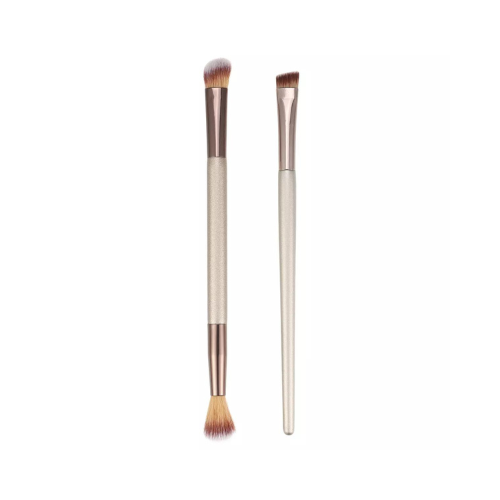
The fluffy blending eye brush is the most versatile and arguably most important eye makeup brush in any collection. Its loosely packed, rounded head blends and diffuses eyeshadow edges so that transitions between colors are seamless rather than harsh. A clean blending brush — one with no product in it — swept over eyeshadow in windshield-wiper motions softens and blurs any hard lines. Having two of these brushes — one for darker shades in the crease and one kept clean for blending — is one of the most useful things you can do for your eye look results. This brush works equally well for applying transition shades in the crease to set the base for a more complex eye look.
Pencil or Detail Brush
A pencil eye brush has a small, tightly packed, rounded or pointed tip — exactly the right shape for precise application of darker shadow to the outer corner, the lower lash line, or the inner corner of the eye. It can also be used to apply a bright or light shade to the inner corner of the eye for an opening effect. This is the brush that gives definition to an eye look without requiring eyeliner, and it is essential for blending out harsh pencil liner by pressing a matching shadow over it with the tip of the brush.
Angled Liner Brush
An angled eyeliner brush is cut at a precise angle and is used with gel liner, cream liner, or wet eyeshadow to create defined liner looks — including the classic winged liner. The angled cut gives control over line thickness by rotating the brush slightly, allowing both thin and slightly thicker lines from the same tool. Many makeup artists consider a quality angled liner brush more controllable than a felt-tip eyeliner pen for creating a precise wing, because the pressure and angle can be adjusted in real time. This brush can also be used with a matte brow powder to fill in and define brows with hair-stroke-like strokes.
Brow Brush (Spoolie)
A spoolie brush — which looks like a clean mascara wand — is used to brush brow hairs upward and into place before and after filling them in. Brushing brows up before filling them reveals the sparse areas that need product and gives the lifted, defined look that has become standard in modern brow styling. After applying brow pencil or powder, running a spoolie through the brows softens and blends the product so it looks like natural hair rather than drawn-on color. Most brow brushes sold as double-ended tools combine an angled brush on one end and a spoolie on the other, which is the most practical configuration for everyday brow work.
Natural vs. Synthetic Makeup Brush Bristles — Which Is Better?
The bristle material of a make up brush is one of the most important factors in how well it works with different product formulas. The old rule — natural hair for powders, synthetic for liquids and creams — is still largely accurate but has been refined by advances in synthetic fiber technology.
| Feature |
Natural Hair Bristles |
Synthetic Bristles |
| Best for |
Loose powder, pressed powder, blush, bronzer |
Liquid, cream, gel foundation, concealer, lip products |
| Product absorption |
Higher — absorbs some product into hair shaft |
Low — deposits more product onto skin |
| Finish with powder |
Soft, diffused, seamless blend |
Can be slightly less diffused (varies by quality) |
| Cleaning ease |
More delicate — needs gentle cleaner, longer dry time |
Easier to clean, dries faster |
| Vegan / cruelty-free |
No (animal hair — squirrel, goat, pony) |
Yes |
| Durability |
Long-lasting with proper care |
Very durable, holds shape well |
| Allergy risk |
Possible for sensitive skin |
Very low |
| Price range |
Moderate to very high |
Low to high (wide range) |
High-quality modern synthetic fibers — particularly tapered, multi-diameter filaments that mimic the structure of natural hair — can now perform comparably to natural bristles for powder application. Brands like Morphe, Real Techniques, Sigma, and IT Cosmetics produce synthetic brushes that are genuinely excellent for both powder and cream products. For most buyers, a collection of quality synthetic brushes covers all bases while being easier to clean and maintain than natural hair brushes.
The Essential Make Up Brush Set — What You Actually Need
Rather than buying a 20-piece brush set where half the brushes have unclear purposes, building a focused collection of genuinely useful tools is a better strategy. Here is a practical starter set that covers most everyday and creative makeup looks:
- 1 flat or buffing foundation brush — for liquid or cream foundation application
- 1 large powder brush — for setting powder and light bronzer all over
- 1 blush brush — medium-sized and domed for cheek color
- 1 angled contour brush — for sculpting and precise bronzer placement
- 1 fan brush — for highlighter and sweeping away fallout
- 1 flat eyeshadow packing brush — for intense lid color
- 2 fluffy blending brushes — one for applying crease color, one kept clean for blending
- 1 pencil or detail brush — for outer corner and lower lash line definition
- 1 angled liner/brow brush — for gel liner and brow powder
- 1 spoolie — for brow grooming before and after product application
This ten-to-eleven brush collection covers foundation, setting, contouring, blush, highlight, and a full range of eye looks. It can be assembled from a combination of a focused brush set and a few individual purchases, and it avoids the bloat of large sets filled with specialty brushes most people use once.
How to Clean Make Up Brushes Properly
Dirty makeup brushes are one of the most common causes of breakouts, patchy application, and muddy color mixing. Product buildup in bristles harbors bacteria, prevents the brush from picking up and depositing product cleanly, and causes eyeshadow colors to mix into each other unintentionally. There are two types of brush cleaning — spot cleaning for quick between-use cleaning, and deep cleaning for thorough weekly maintenance.
Spot Cleaning for Quick Color Removal
Spot cleaning uses a quick-dry brush cleaner spray or solid brush cleaner to remove surface product from bristles between uses — particularly useful when switching between eyeshadow colors during a single application session. Spray the cleaner onto the bristles or onto a clean cloth and swipe the brush back and forth until the color transfers cleanly. Spot cleaning removes loose product but does not deeply sanitize the brush or remove oil and wax buildup from cream products. It should not replace regular deep cleaning but is genuinely useful for on-the-go use and for keeping color application clean when working with multiple shades.
Deep Cleaning with Brush Shampoo or Cleanser
Deep cleaning should be done at least once a week for brushes used daily, and more frequently for foundation and concealer brushes that carry liquid or cream product and sit close to the skin. Wet the bristles with lukewarm water — always pointing the bristles downward, never upward, to prevent water from loosening the glue in the ferrule that holds the bristles in place. Work a small amount of dedicated brush cleanser, baby shampoo, or gentle dish soap into the bristles using a silicone brush cleaning mat or the palm of your hand, using circular and back-and-forth motions until the water runs clear. Rinse thoroughly, gently reshape the bristle head with your fingers, and lay the brush flat or hang it with bristles pointing downward to dry. Never stand a wet makeup brush upright in a cup — water drains into the ferrule and loosens the glue over time, causing shedding.
How to Tell When a Make Up Brush Needs Replacing
A well-maintained makeup brush can last for years — some professional-quality brushes last a decade or more with proper care. However, there are clear signs that a brush has reached the end of its useful life and is degrading your application results rather than improving them.
- Shedding bristles: Occasional bristle loss is normal in low-quality brushes, but significant shedding after washing indicates the ferrule glue has broken down. Loose bristles end up on the skin and in the product, and a brush that sheds heavily cannot apply product evenly.
- Permanent misshapen head: If a brush no longer returns to its original shape after washing and reshaping — instead staying bent, frayed, or flat — it cannot perform its intended function. This is common in cheap brushes after repeated washing but also happens to natural hair brushes that have been stored improperly while wet.
- Scratchy or rough bristle texture: Bristles that feel scratchy against the skin even after conditioning or deep cleaning have become too rough for comfortable use, particularly around the eye area. This is more common with natural hair brushes that have dried out, and sometimes a drop of conditioner worked through the bristles during cleaning can revive them temporarily.
- Persistent discoloration or odor after cleaning: A brush that cannot be cleaned to a neutral color or that retains a musty or chemical smell after thorough washing has deep product contamination that regular cleaning cannot resolve. This is a hygiene concern and the brush should be replaced.
- Noticeably worse application performance: If a brush that used to blend eyeshadow seamlessly now leaves streaks, or a foundation brush that used to apply smoothly now leaves brush marks regardless of cleaning, its structural integrity has degraded beyond the point where maintenance can restore it.
Makeup Brush Storage Tips to Protect Your Investment
How you store your make up brushes between uses directly affects how long they maintain their shape and performance. Improper storage is one of the most common reasons good brushes lose their shape prematurely or become contaminated between uses.
- Store brushes upright in a holder or cup with bristles pointing up — but only when they are completely dry. During drying, always lay flat or hang bristles-down. Once dry, upright storage keeps bristle heads from being compressed against a surface.
- Use a brush roll or case for travel — rolling brush cases protect bristle heads from being bent or crushed in a makeup bag where they compete for space with products. Many brush rolls have individual pockets per brush that keep heads separated and protected during transit.
- Keep brushes away from direct sunlight and heat — prolonged UV exposure and heat can dry out natural bristles, degrade synthetic fibers, and weaken the adhesive in the ferrule. Bathroom counters near windows or under heating vents are among the worst places to store brushes long-term.
- Avoid storing brushes loose in a makeup bag with products — caps from products scratch bristle surfaces over time, and the bristle heads pick up residue from the outsides of product containers. A dedicated compartment or holder prevents this cross-contamination.